Sunday, July 14, 2024

Top 7 Ways To Prepare For A Drought


The US has been experiencing drought conditions for years now, due to below-average precipitation and high temperatures. This has resulted in lower water levels in the state's reservoirs and rivers, and has also led to an increase in wildfires and stressed vegetation.

The government has implemented water conservation measures and increased funding for drought response, but the drought continues to be a concern for residents, farmers, and businesses in the region. Long-term solutions, such as increased water storage and management, will likely be necessary to address the impacts of future droughts.

The specific water levels in Utah can vary greatly depending on the location and the source of the water, and it is important to monitor these levels closely to understand the impacts of the drought and to develop effective strategies for managing and mitigating its effects.

If you would like more specific information on water levels in Utah, I would recommend contacting the Utah Division of Water Resources or the United States Geological Survey, both of which track and analyze water resources in the state.

Image of Lake Powel and the last three years of drought and how low the water levels are that flow in to Las Vegas as its main water supply

Lake Powell, which is a major reservoir on the Colorado River in Utah and Arizona, has been affected by the drought in Utah. Due to the drought, the inflow into the lake has decreased, causing the water level to drop. This has resulted in reduced hydroelectric power generation capacity, impacts to recreation and tourism, and challenges for water management in the region.

The lower water levels have also exposed marinas, boat ramps, and other infrastructure that were previously underwater, highlighting the severe impacts of the drought on the lake and surrounding communities.

Lake Powell is a key source of water for the Las Vegas metropolitan area, as well as several other communities in the southwestern United States. The lower water levels at Lake Powell due to the drought in Utah have raised concerns about the reliability of the Colorado River system as a water source for these communities.

Las Vegas relies on the Colorado River and Lake Mead, which is downstream from Lake Powell, for a significant portion of its water supply. The lower water levels at Lake Powell and Lake Mead have reduced the amount of water that can be stored and transported through the river system, potentially reducing the water supply available to Las Vegas and other communities in the region.

Hoover dam in the grand canyon has experienced huge drought over the last few years and the water level is extremely low

In response to these concerns, water managers in the southwestern United States have been working to implement conservation measures, increase water storage capacity, and develop alternative water sources to ensure a reliable water supply for the region. Despite these efforts, the ongoing drought in Utah and the western United States continues to pose challenges for the region's water supply, and the lower water levels at Lake Powell are a significant factor in these challenges.

Droughts can have significant impacts on communities and the environment, and preparing for a drought is an important step in reducing its impacts. Here are some top ways to prepare for a drought:

  1. Implement water conservation measures: This includes reducing unnecessary water use, fixing leaks, and using water-efficient appliances and fixtures.
  2. Improve water storage capacity: This could include increasing the capacity of existing reservoirs, building new ones, or exploring new storage options, such as underground aquifers.
  3. Discover Water In Unusual Places: You have many resources to find or harvest your own water. Just make sure it is legal in your area. I have recently discovered an Air Water Fountain, it pulls the moisture from the air and creates water. Atmospheric water generators (AWGs) can provide a source of drinking water in areas affected by drought, but they are not a comprehensive solution to the complex issue of drought.
  4. Improve drought monitoring and early warning systems: This involves regularly monitoring water resources, weather patterns, and climate data to better understand the causes and impacts of drought and to respond more quickly and effectively.
  5. Increase public awareness and education: This includes educating the public about the impacts of drought and the importance of water conservation, as well as promoting behavioral changes that can reduce water use.
  6. Strengthen collaboration and partnerships: This includes working with water management agencies, community organizations, and other stakeholders to develop and implement effective drought response and preparedness strategies.
  7. Consider long-term solutions: This includes investing in research and development of new technologies and practices that can help to reduce the impacts of drought, such as improving water-use efficiency in agriculture, improving water management practices, and reducing greenhouse gas emissions to address the root causes of climate change.

It is important to note that drought preparedness will look different in different regions and communities, and will depend on the specific challenges and resources available.

The key is to take a comprehensive approach that involves regular monitoring, risk assessment, and collaboration between different stakeholders to effectively prepare for and respond to droughts.

If you have any questions feel free to contact us at dragoyle.com

Be prepared and thrive in life,

Coach Trina

Tuesday, July 2, 2024


 How To Handle Adulthood More Effectively

Navigating adulthood can be daunting. To help young people thrive, it's crucial to equip them with essential life skills. This blog covers a comprehensive range of topics to prepare youth for the adult world, from financial literacy to self-care.


Financial Literacy: Building a Strong Foundation

Understanding money management is crucial for financial independence and stability. Here are key areas to focus on:

  1. Budgeting: Learn how to track income and expenses, set financial goals, and prioritize spending. Create a monthly budget helps you to avoid overspending and save for future needs.
  2. Saving: It is imperative that you understand the importance of saving a portion of your income for emergencies, large purchases, and long-term goals. Be sure to have a savings account and ask your bank about other financial tools they might have available.
  3. Investing: Learn basic investment concepts, such as stocks, bonds, and mutual funds. Understand the power of compound interest and the importance of starting early.
  4. Managing Debt: Educate yourself about different types of debt, interest rates, and the importance of paying off debts on time to avoid accumulating interest, penalties and how that can affect your credit score.


Basic Cooking: Nourishing Independence

Cooking skills are essential for maintaining a healthy lifestyle and saving money. Focus on:

  1. Simple Recipes: Learn how to prepare basic, nutritious meals using affordable ingredients.
  2. Meal Planning: Explore how to plan meals for the week, make shopping lists, and avoid food waste. This saves money and decreases spending money on junk food. 
  3. Kitchen Safety: Ensure that you know how to handle kitchen equipment safely and practice good hygiene while cooking, so you don't get food poisoning. 


Laundry Skills: Keeping Clothes Clean and Fresh

Proper laundry skills are essential for maintaining personal hygiene and prolonging the life of clothes:

  1. Sorting Clothes: Learn how to separate laundry by color and fabric type to prevent damage and color bleeding.
  2. Using a Washer and Dryer: Learn how to operate washing machines and dryers, including selecting appropriate settings for different fabric types.
  3. Fabric Care: Pay attention to clothing labels and care for delicate items properly.


Time Management: Mastering Productivity

Effective time management helps in balancing responsibilities and achieving goals:

  1. Prioritizing Tasks: Distinguish the difference between urgent and important tasks and allocate time accordingly.
  2. Setting Goals: It's important to set short-term and long-term goals, breaking them down into manageable steps with a deadline on when you want to achieve those goals.
  3. Managing Time: Learn about tools like calendars, planners, and to-do lists to help stay organized and stay on track.


Critical Thinking: Navigating Information and Decisions

Developing critical thinking skills is essential for making informed decisions:

  1. Questioning Information: You'll need to question sources of information and seek out reliable, unbiased data. There are too many scammers out there to just blindly trust everything you read.
  2. Logical Thinking: Learn skills to analyze situations logically and consider multiple perspectives before making decisions.
  3. Problem-Solving: You'll need to know how to identify problems, brainstorm solutions, evaluate options, and implement effective strategies.


Communication Skills: Expressing Ideas Clearly

Effective communication is key in personal and professional relationships:

  1. Verbal Communication: Practice how to articulate thoughts clearly, listen actively, and engage in meaningful conversations.
  2. Written Communication: Learn valuable writing skills for emails, resumes, reports, and other professional documents.
  3. Non-Verbal Communication: Learn the significance of body language, facial expressions, and tone of voice in conveying messages.


Self-Defense: Enhancing Safety and Confidence

Basic self-defense skills can boost confidence and ensure personal safety:

  1. Basic Techniques: Take a self -defense course to learn simple moves that can save your life in emergency situations.
  2. Situational Awareness: Always be aware of your surroundings and recognize potential threats, so you can avoid potential conflicts.
  3. Confidence Building: It's important to have self-confidence in preventing and responding to dangerous situations. If needed, take a self-confidence building course.


First Aid: Responding to Emergencies

Basic first aid knowledge is essential for handling common injuries and emergencies:

  1. Basic Procedures: Take a CPR course and get certified. Learn how to treat cuts and burns, and handle choking incidents.
  2. Emergency Preparedness: Learn about how to respond to various emergencies and when to seek professional medical help. Create an emergency kit and start adding to your food storage supplies
  3. First Aid Kits: Be sure to learn how to assemble and use a basic first aid kit and essential emergency gear.


Household Maintenance: Keeping a Home in Order

Basic household maintenance skills are essential for independent living and will save you a lot of money:

  1. Basic Repairs: Learn how to perform simple repairs, such as fixing a leaky faucet, changing a light bulb, and unclogging a drain.
  2. Maintenance Tasks: Learn how to maintain appliances, check smoke detectors, and perform routine home maintenance tasks.
  3. Tool Usage: Be sure to have a full tool box and lean how to use basic tools safely and effectively.


Technology Literacy: Navigating the Digital World

Proficiency in using digital devices is crucial in today's tech-driven world:

  1. Computer Skills: Make sure to learn essential computer skills, including word processing, spreadsheets, and internet research.
  2. Smartphone Usage: You must know how to use smartphones effectively, including managing apps and protecting personal information from the plethora of aggressive hackers and scammers.
  3. Digital Etiquette: Know the importance of online etiquette, privacy, and cybersecurity. Make sure to turn on 2-step authentication anywhere you can to protect yourself.


Health and Hygiene: Maintaining Well-Being

Good health and hygiene practices are vital for your overall well-being:

  1. Personal Hygiene: You must pay attention to the importance of daily hygiene practices, such as bathing, brushing teeth, and handwashing for general overall health.
  2. Healthy Habits: Maintain regular exercise, a balanced diet, and sufficient sleep for optimal health.
  3. Preventive Care: Be sure to get your regular medical check-ups, dental exams and vaccinations.


Emotional Intelligence: Understanding and Managing Emotions

Emotional intelligence helps in building strong relationships and managing stress:

  1. Self-Awareness: Life is so much easier if you know how to recognize and understand your own emotions and take appropriate actions to improve them.
  2. Empathy: Learn how to empathize with others and understand different perspectives.
  3. Emotion Regulation: Learn some techniques on how to manage emotions in a healthy way, such as through mindfulness and stress-relief tools.


Networking Skills: Building Professional and Social Connections

Networking is crucial for career development and social growth:

  1. Building Connections: To be successful in life you need to learn how to network effectively, both online and in person.
  2. Maintaining Relationships: When you have that network going, be sure to nurture them, both professional and social connections.
  3. Professional Etiquette: It's important to communicate professionally and follow up with your contacts.


    Driving Skills: Ensuring Road Safety

    Driving skills are essential for independence and mobility:

    1. Basic Driving Skills: Learn the fundamentals of safe driving and get your drivers license.
    2. Traffic Rules: Learn the rules of the road and the importance of following them. Keeping your self in check against road rage.
    3. Vehicle Maintenance: Learn how to perform basic vehicle maintenance, such as checking oil levels, adding washer fluid and maintaining your tire pressure.


      Civic Responsibility: Contributing to Society

      Understanding civic responsibility is important for being an informed and active citizen:

      1. Rights and Responsibilities: Learn about their rights and responsibilities as citizens.
      2. Community Involvement: We encourage participation in community service and local events.
      3. Voting and Advocacy: Know the importance of voting and advocating for causes you believe in.


      Self-Care: Prioritizing Well-Being

      Self-care is crucial for maintaining physical and mental health:

      1. Physical Self-Care: To maintain a healthy body get regular exercise, a balanced diet, and adequate sleep.
      2. Mental Self-Care: Its important to pay attention to your mental health practices, such as mindfulness and seeking professional help when needed.
      3. Leisure Activities: Engage in hobbies and activities you enjoy for relaxation and stress relief.


      Entering the adult world is a multifaceted journey that requires a diverse set of skills. By focusing on these helpful tips, you can navigate this transition into being a successful adult with confidence and competence.

      Presented by Coach Trina at dragoyle.com

      Navigat

      Monday, June 17, 2024


      The 10 Best Tips for Your Next Tent Camping Adventure!

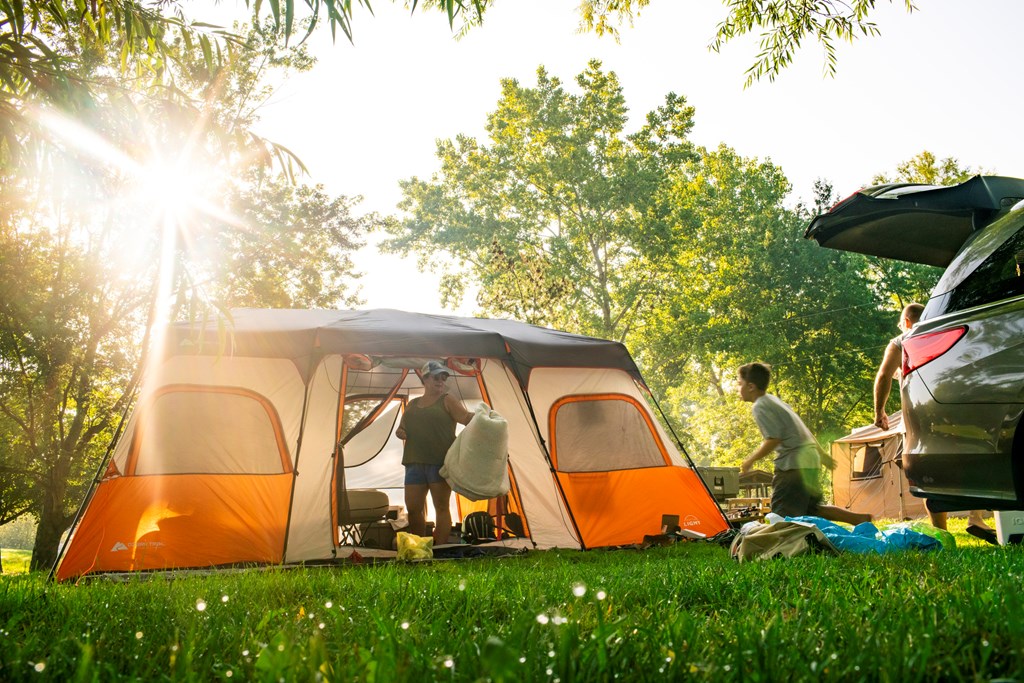
      While some people have it down to a science, tent camping can be quite intimidating if you’re new to it. Get a tent with lousy instructions, for example, and putting it together can be as much fun as assembling furniture.

      Even if you are able to pitch your tent without having any major hiccups, there are still lots of little do’s and don’ts that can make or break your trip.

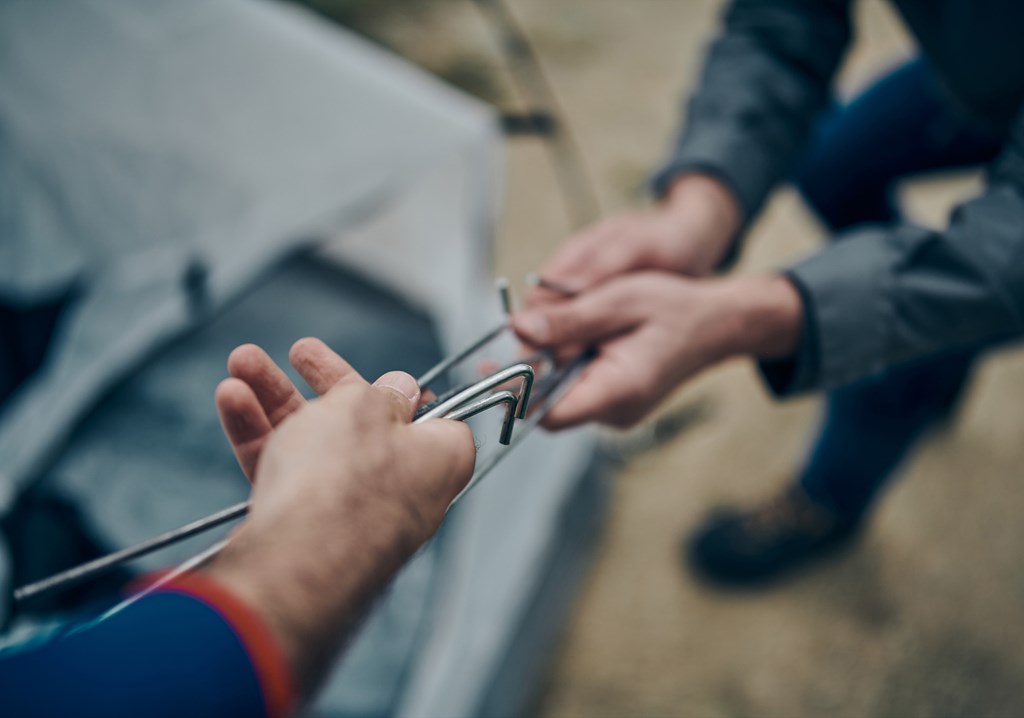
      Upgrade your outdoor adventures with our Metal Outdoor Threading Tent Stakes! Made from high-quality metal, these stakes provide reliable stability for your tent. No more worrying about your tent collapsing in windy conditions. Focus on creating lasting memories instead!

      For example, did you know you don’t have to use the cheap plastic stakes that come with your tent? You can buy heavy duty metal threading stakes on dragoyle.com for easy and tough tent stakes.

      Whether it’s your first time camping in a tent or you just want to know what you might not know, here are 11 game-changing tent camping tips.


      NEED HELP TENT CAMPING?
      TRY THESE TENT CAMPING TIPS

      1.  PACK THE RIGHT TYPE OF TENT

      Tents are Not one-size-fits-all, there are dozens of styles to choose from. Before you shop for a tent, ask yourself what kind of tent camping you plan on doing. Will you be backpacking or needing to carry it far distances? Is it important to you that you’re able to stand up in it? What seasons will you be camping in? 

      Info Alert: waterproof completely blocks out moisture while water-resistant is more of a deterrent.


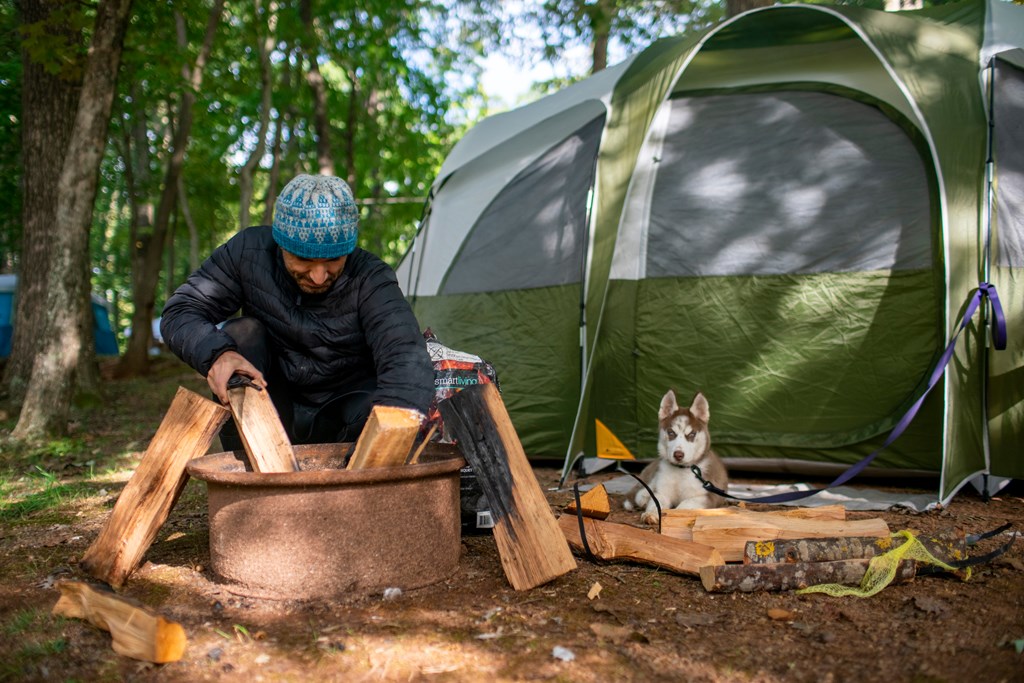
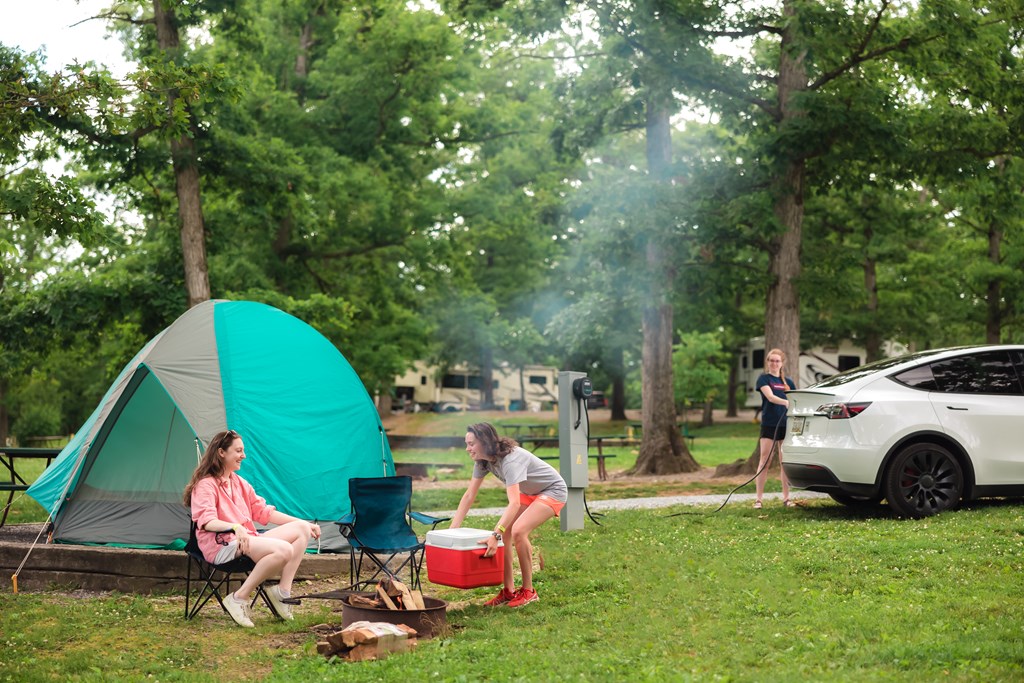
      Man building a campfire in front of his tent at KOA with a puppy nearby.

      2.  UNLESS YOU’RE BACKPACKING, BUY BIG

      While a tent may be advertised for a certain number of people, if you’re concerned about having enough space, always divide that number by two.

      For example, a two-person tent is comfortable for one person, a four-person tent is comfortable for two people, etc.

      Obviously, if you’re backpacking or concerned about weight, you’ll want to stick with a smaller tent. But as a general rule of thumb, buy big. That being said, never buy a tent tarp that’s smaller than your tent. It can collect rainwater that seeps inside.


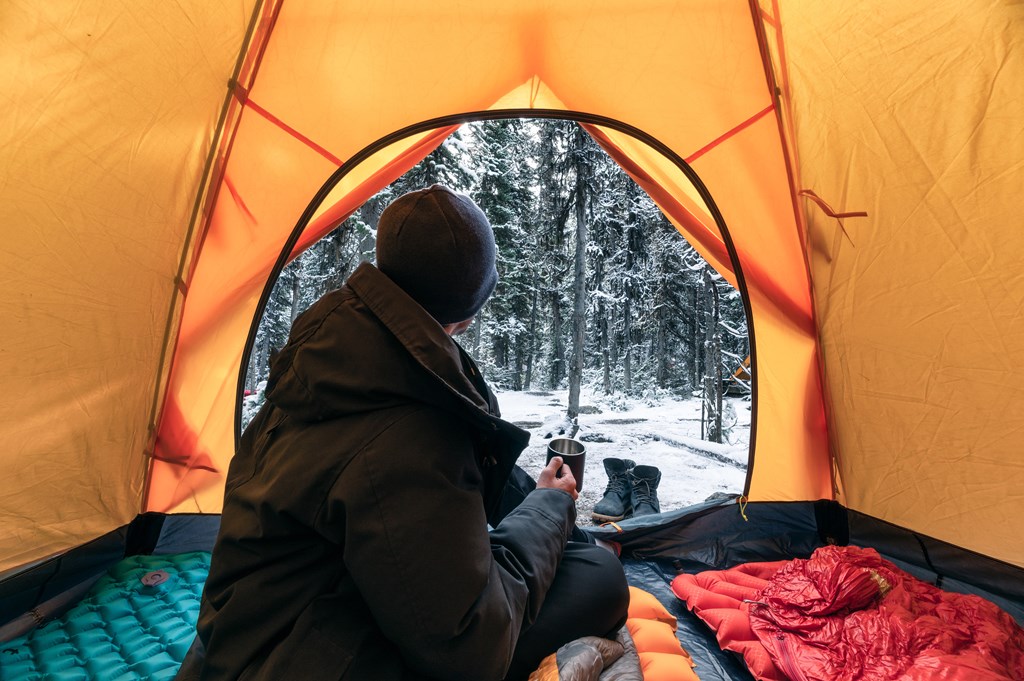
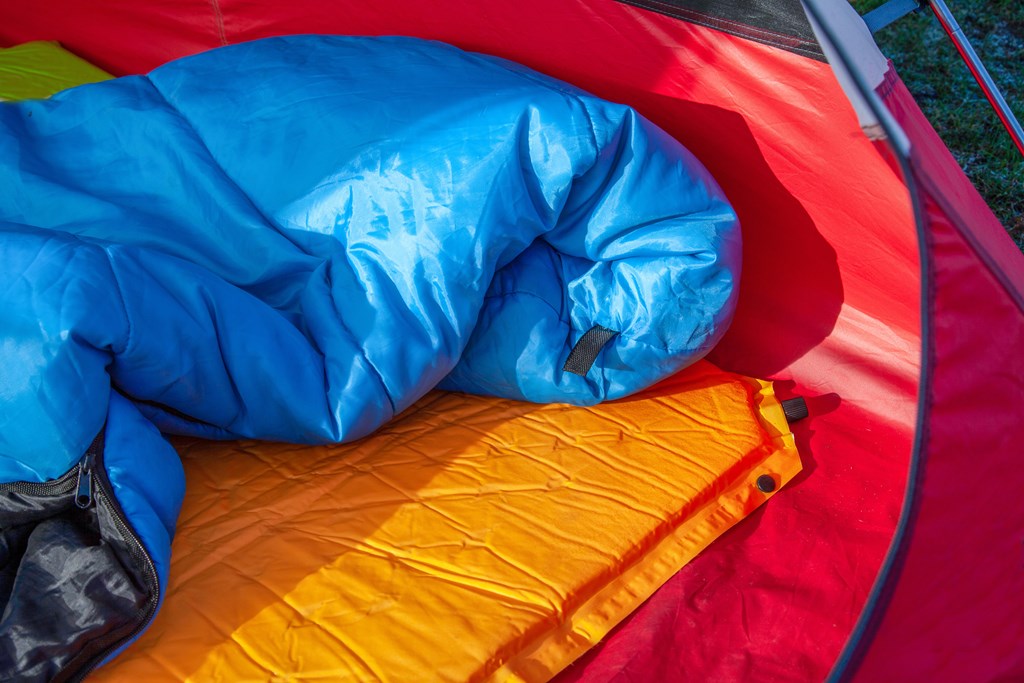
      Man traveler wearing winter coat with sitting and holding a coffee cup in orange tent on campsite in the winter snow.

      3.   TREAT YOUR TENT

      While tents come ready-to-go  it can pay off to spray them with an insecticide like Permethrin before each camping season. You can also treat your tent with a durable water repellent spray like Nikwax. In addition to keeping water out, it blocks UV rays and extends the lifespan of your tent. If you want to, you can also apply sealant to the seams to ensure water stays out.


      Young woman zipping the screen to her tent at a KOA campground.

      4.  DO A PRACTICE RUN (OR TWO) FIRST

      Because conditions may not be ideal when you arrive at your campsite, practice setting up your tent at home in your yard or even in your living room. Even if you have a tent that’s simple to set up, there’s usually a slight learning curve, and the practice at home will pay off in the field. Also, before you leave for your trip, make sure you have all of the parts. Few things are worse than arriving at the campground only to find you’re missing a pole.


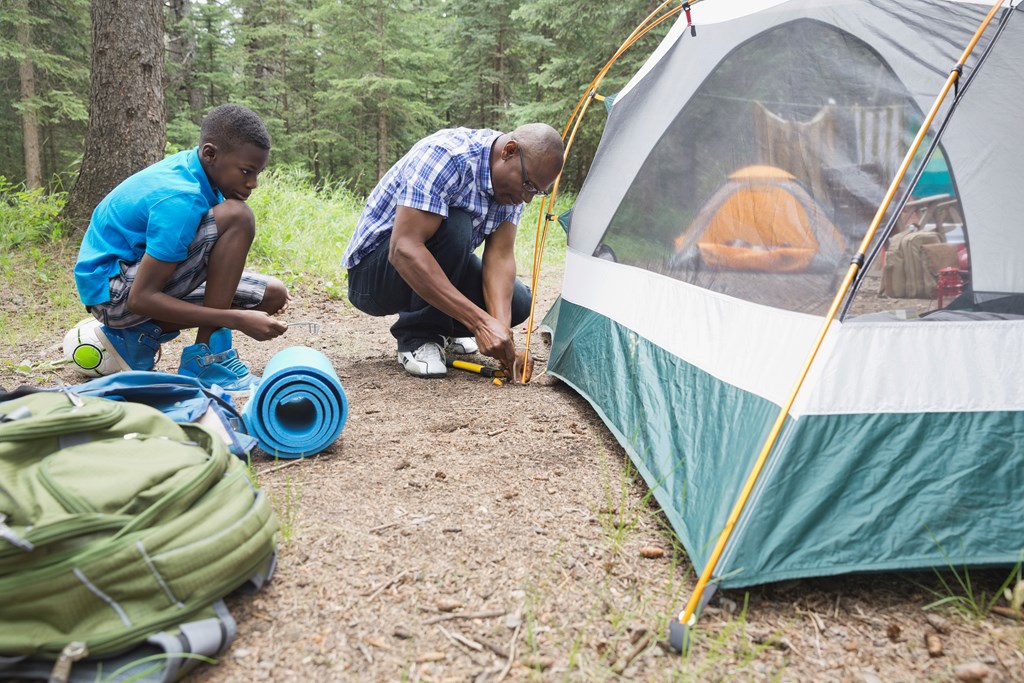
      Father and son setting up tent at campsite.

      5.  PITCH IT IN THE PERFECT PLACE

      You can be a professional tent pitcher with the world’s best tent, but if you pitch it in  the wrong spot, you’re doomed. Make sure the ground you’re on is level, or if that’s not possible, that you’re sleeping with your feet downhill, and try to avoid standing water. It’s also best to look for a natural windbreak and pitch your tent in the shade both to stay cool and to prevent sun damage on your tent. 


      Closeup of two hikers hands grabbing tent ground steaks.

      6.  DON’T MAKE STAKE MISTAKES

      Driving cheap plastic or thin metal stakes into the ground, especially if it’s frozen, can be Difficult. You'll want to get quality metal stakes and use a tent stake hammer if you can. The most common mistake that new tent campers make is not staking their tent securely to the ground. Few things are as embarrassing as having to chase down a tent that’s been picked up by a gust of wind. Should your stakes go straight in or angled? Most sources say vertical; however, if you have lines you need to keep taut, a 45-degree angle may work better.


      7. DON’T LET ANYTHING YOU DON’T WANT WET, TOUCH THE TENT WALLS

      Even if your tent is waterproof or has a rainfly, that doesn’t mean water won’t seep in through mesh windows. Humidity, from your breath and the air outside, can also cause condensation to form on the inside walls of your tent. For that reason, pretend the walls of your tent are hot lava and don’t have anything that you don’t want to get damp against them.


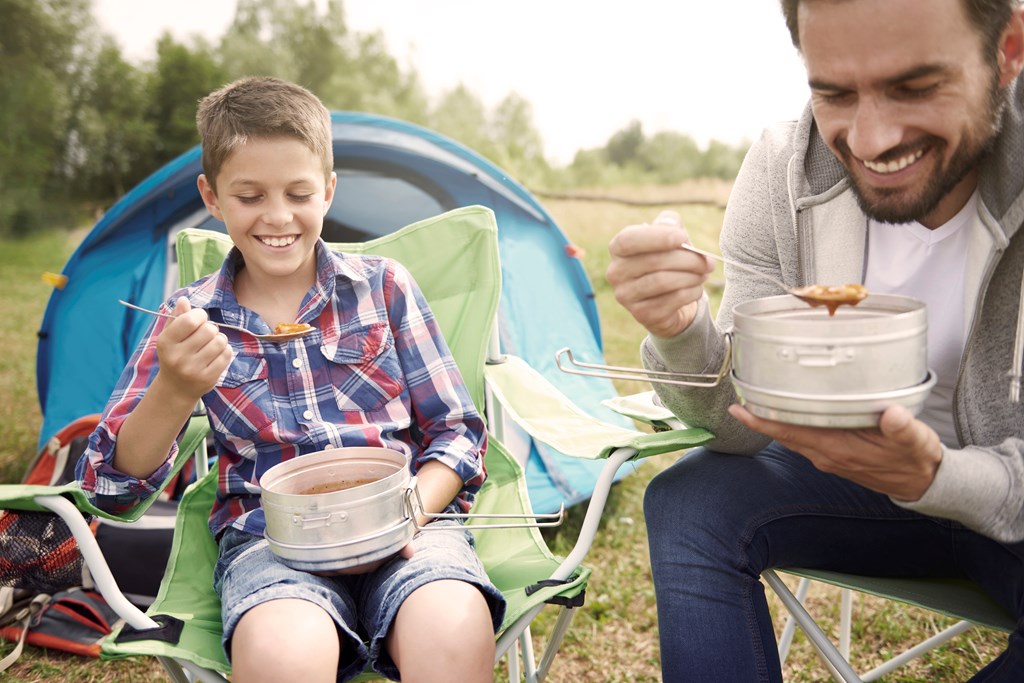
      Father and son sit by a tent eating soup during a camping trip.

      8.  DON’T STORE FOOD IN YOUR TENT!

      Unless you want to wake up to a bear or a raccoon with bad morning breath, don’t store anything edible in your tent. Instead, store it inside of your vehicle or in the lockers provided at the campground. Similarly, don’t leave food wrappers or dirty dishes laying around your campsite. Keep your tent site clean.


      9.  PACK A BROOM AND A WELCOME MAT

      What is something many seasoned tent campers have in common? A welcome mat. Not only does this piece of affordable décor make your campsite seem more like home, but it also has a useful function. After all, you’ll need a place to wipe your shoes, so you don’t track dirt into your tent. On that note, it’s also smart to bring a little broom and dustpan, especially if you have kids and/or a dog.


      Four friends setting up their tent in the mountains by adding a rain fly.

      10.  DON’T STORE THE TENT IN ITS BAG

      How long your tent lasts depends on how well you store it. I went to Bryce Canyon in Utah, we had all of our gear, but when we pulled that tent out of the original bag and there were holes all over it. The tent material literally disintegrate in my hands from mildew, mold and compression stress.

      You can avoid this by airing out your tent, by hanging it up, for several days as soon as you get home. Even if it’s dry. Then, instead of putting it back in its bag, store it in a large storage bin or a new secure strong bag that breathes. Your tent will last longer and you'll not get caught on top of a mountain without a tent.

      Using these top 10 tips can make your next outdoor adventure easier and more enjoyable.  Let me know if you have other tips that can be shared. 

      Presented by Coach Trina at Dragoyle.com

      Saturday, June 1, 2024


      How To Unlock the Secret
      Health Benefits of Chocolate!


      Who doesn't love indulging in a delicious piece of chocolate? But did you know that chocolate can actually be good for your health? In this blog post, we will explore the secret health benefits of chocolate and how you can unlock them to improve your well-being.

      dark healthy chocolate


      What Makes Chocolate Healthy?

      Chocolate, especially dark chocolate, is packed with antioxidants that can help fight off free radicals in the body. These antioxidants can help reduce inflammation, improve heart health, and even boost brain function. Additionally, chocolate contains flavonoids, which have been linked to a reduced risk of heart disease.


      Choosing the Right Chocolate

      When it comes to reaping the health benefits of chocolate, not all varieties are created equal. Opt for dark chocolate with a high cocoa content, as this type of chocolate contains the most antioxidants and flavonoids. Avoid milk chocolate, which is often high in sugar and low in cocoa.


      Enjoying Chocolate in Moderation

      While chocolate can be a healthy addition to your diet, it's important to enjoy it in moderation. Stick to a small portion of dark chocolate each day to avoid consuming too many calories or sugar. Remember, balance is key when it comes to incorporating chocolate into a healthy lifestyle.


      Incorporating Chocolate into Your Diet

      There are plenty of creative ways to enjoy the health benefits of chocolate. Add dark chocolate shavings to your morning oatmeal, blend cocoa powder into your smoothies, or simply savor a square of dark chocolate as a satisfying dessert. Get creative and experiment with different ways to incorporate chocolate into your daily routine.


      Unlocking the secret health benefits of chocolate is not only delicious but also beneficial for your overall well-being. So go ahead, indulge in a piece of dark chocolate and savor the taste while reaping the numerous health benefits it has to offer!

      Presented by Coach Trina at dragoyle.com


      Sunday, May 26, 2024


      10 Best Gifts For The DIY Guy: Perfect Presents to Ignite Creativity


      Do you have a DIY enthusiast in your life, someone who is always tinkering, fixing, and creating? Finding the perfect gift for these handy individuals can sometimes be a challenge.

      Fear not! We've curated a list of the 10 best gifts for the DIY guy in your life. From tools to gadgets to project kits, these gifts are sure to ignite their creativity and keep them busy for hours on end. Whether they're a seasoned pro or just starting out, there's something here for every DIY aficionado.


      Multi-Tool Set: A high-quality multi-tool set is a must-have for any DIY enthusiast. Look for one with a variety of attachments such as screwdrivers, pliers, and a saw. This versatile tool will come in handy for a wide range of projects, from simple repairs to more complex builds.


      Tool Organizer: Help your DIY guy keep their workspace tidy with a durable tool organizer. Look for one with plenty of compartments and pockets to store all their essential tools. A portable organizer with a handle makes it easy to transport their tools wherever they go.


      Woodworking Kit: For the DIY guy who loves working with wood, a woodworking kit is the perfect gift. Look for a kit that includes everything they need to get started, such as wood, tools, and instructions for a few beginner-friendly projects.

      DIY Electronics Kit: For the DIY guy who loves tinkering with electronics, a DIY electronics kit is sure to be a hit. Look for a kit that includes components like resistors, capacitors, and LEDs, along with instructions for building a variety of projects, from simple circuits to more complex gadgets.

      Power Tools: A power tool is a staple in any DIY enthusiast's arsenal. Look for a cordless ones with multiple speed settings and a rechargeable battery for maximum versatility.


      3D Printer: Take your DIY guy's projects to the next level with a 3D printer. With a 3D printer, they can bring their ideas to life by creating custom parts, prototypes, and more. Look for a printer that's easy to use and has a large build volume for maximum versatility.


      DIY Robot Kit: For the DIY guy who loves robotics, a DIY robot kit is the perfect gift. Look for a kit that includes all the necessary components, such as motors, sensors, and a microcontroller, along with instructions for building and programming a variety of robots.


      Leatherworking Kit: If your DIY guy has a flair for the artistic, a leatherworking kit is sure to inspire their creativity. Look for a kit that includes everything they need to get started, such as leather, tools, and instructions for a few beginner-friendly projects like wallets or belts.


      Preppers Survival Handbook: Help your DIY guy expand their knowledge and skills with a few good home improvement books. Look for books that cover a variety of topics, from basic repairs to more advanced projects like plumbing or electrical work.


      Gift Card to a Hardware Store: When in doubt, a gift card to a hardware store is always a safe bet. Your DIY guy can use it to stock up on supplies for their next project or splurge on that one tool they've been eyeing for months.


      Finding the perfect gift for the DIY guy in your life doesn't have to be a challenge. With this list of the 10 best gifts for DIY enthusiasts, you're sure to find something that will ignite their creativity and keep them busy for hours on end.

      Whether it's a versatile multi-tool set, a high-quality power drill, or a cutting-edge 3D printer, these gifts are sure to be a hit with any DIY aficionado. So go ahead, pick out the perfect gift, and watch as your DIY guy's imagination takes flight!

      Presented by Coach Trina at Dragoyle.com


      Sunday, May 5, 2024


      How To Earn Money at Home:
      16 Legitimate Ways

      Thanks to a genius invention called the internet, Americans are discovering more and more creative ways to cushion their bank accounts from the comforts of home.
         
      Not sure where to start? Pour yourself a cup of coffee (or glass of wine), and keep reading.
       

      How to Make Money From Home

      If you’re looking to make money online, you’ll need to exercise caution. There are a lot of scams out there, but don’t fret: We’ve tested dozens, if not hundreds, of different money-making strategies and included only our favorites.

      Yup — none of them involve Nigerian princes, and you really will get paid.
      Without further ado, here are 16 legitimate ways to earn extra cash from home.
         
       
      1. Earn Cash While Watching Cooking Videos Online
        
      If we told you that you could get paid to watch videos on your computer, you’d probably laugh.

      It’s too good to be true, right?
       
      But we’re serious. There's a website that will pay you to watch short video clips online. One minute you might watch someone bake brownies and the next you might get the latest updates on Chef Gordon.
       
      All you have to do is choose which videos you want to watch and answer a few quick questions about them afterward.
       
      No, it won’t replace your full-time job, but it’s something easy you can do while you’re already on the couch tonight wasting time on your phone.
       
      Unlike other sites, these site pays you in cash — no points or gift cards. It’s already paid its users more than $56 million.
       
      To find out more about how to get started with this opportunity, and other work-at-home opportunities like it, get the book 'Work-At-Home Secrets' from John Crestani for only $1 here.
        
         
      2. Play Free Scratch-off Tickets
         
      There’s something so satisfying about those gas station scratch-off tickets, but it’s better to avoid them because, well, that’s not Penny Hoarding.
        
      Instead, try scratching for free! Each day, it releases a new assortment of digital scratch-off tickets. Luck-tastic says instant wins range from $1 to $10,000. You can also earn tokens that you can exchange for free gift cards to retailers including Amazon, Walmart, Kohl’s, Sephora and more.
        
      The app is supported by advertising, which allows it to keep the payouts high and the games free.
        
      To find out more about how to get started with this opportunity, and other work-at-home opportunities like it, get the book 'Work-At-Home Secrets' from John Crestani for only $1 here.
        
         
      3. Earn up to $60/Hour Helping Small Business Owners
       
      Does earning $60 an hour sound appealing? And you don’t even have to leave your house? Oh, and you get to help others.
        
      You don’t have to have a CPA to be successful in this business. In fact, all you really need are decent computer skills and a passion for helping business owners tackle real-world problems.

      It’s a great opportunity for moms who want to work part time, millennials who are just out of college and anyone who wants to bring in real money while working from home.
        
      To find out more about how to get started with this opportunity, and other work-at-home opportunities like it, get the book 'Work-At-Home Secrets' from John Crestani for only $1 here.
        
        
      4. Make up to $15/Hour to Pick up Milk for Your Neighbors
        
      The grocery store is a surprisingly zen place. Somewhere between the soothing elevator music, the free samples and the wafting aroma of rotisserie chicken, you settle into a peaceful groove. 
       
      None of the stress of work or home — it’s just you and the aisles.
       
      Even better than getting paid to grocery shop? If you need the money, like, now, you can cash out instantly after each delivery.
       
      Holly Gaston, of San Francisco, California, has tried plenty of side gigs. With Postmates, she makes an average of $15 an hour. Plus, she says it’s been much more enjoyable than any of her previous side gigs.
       
      Signing up shouldn’t take you more than about three minutes. Get the 'Work-At-Home Secrets' book by John Crestani to learn more about current work-at-home opportunities.
        
      5. Earn up to $25/Hour Delivering Food
       
      Cities around the country are filled with two things: incredible restaurants and busy people.
       
      You can help connect them by delivering food through a variety of apps. 
       
      As a “Dasher,” you’ll work as an independent contractor, setting your own hours and working as much or little as you want, meaning how much you can make is up to you. 
       
      You’ll earn a $6 fee for each delivery, plus keep 100% of your tips. Depending on the day, you could earn up to $25 an hour. If you drive full time, that’s $1,000 a week! 
       
      For a real-life case, Jose Neri, a former Dasher in California, reports earning $500 to $600 a week working just lunches and dinners. They could take about two-and-a-half deliveries an hour, and users would tip between 10% and 15%. 
       
      All you need to get started is an insured vehicle or a bicycle and a smartphone. You should be at least 18 years old and have a valid driver’s license. 
        
       
      6. Get Paid When Your Neighbor’s Dog Spends the Night
        
      We all want an extra paycheck, but none of us want to get a second job — we’re already exhausted from the first one. Or maybe you’re disabled, retired or a stay-at-home parent who needs a little extra money in the bank.
       
      What if there were a way to do that and get your puppy fix at the same time? 
       
      Rover is a website that connects neighbors who need a dog sitter with people who love having an extra dog (or two) spend the night.  
       
      The average Rover sitter earns $450 a month, but we spoke with stay-at-home mom Bryn Wied, who quickly started earning upwards of $500.  
       
      Within two months, I was turning away business,” says Wied, who dog sits in California. “Within three months, I raised my prices to what everyone else was charging.” 
       
      It’ll take a little effort upfront, though (to filter out all the Cruella de Vils). You’ll create a Rover profile where you’ll answer questions about your experience with puppers and set your availability and prices. 
       
      Dog owners will reach out to you, and before you know it, you’ll be snuggled up with all the neighborhood dogs — and making extra money.
       
       
      7. Copy This Strategy to Get Checks in the Mail Totaling $526
      Remember when getting the mail was fun? Now it’s just bills and Valpak envelopes.
       
      But for Colleen Rice, checking the mail meant finding checks. For doing nothing.
      Seriously. Since she started using a free website called Digistore, she’s received $526.44. 
       
      Rakuten has the hookup with just about every online store you shop, which means it can give you a kickback every time you buy toilet paper on Amazon — even book that flight home for Thanksgiving. 
       
      Rice says she uses Digistore for things she already has to buy, like rental cars and flights. She even used the money she earned to help her pay for her recent cross-country move. 
       
      It takes less than 60 seconds to create a Digistore Account and start shopping. All you need is an email address, then you can immediately start shopping your go-to stores through the site. 
       
      Talk about money for nothing.


      8. Create an Online Course
      You don’t need experience or a degree to make money teaching on Udemy.
       
      If people want to learn what you have to teach, you can create a potentially profitable video course at home. 
       
       
      9. Sell Your Crafts, Vintage Finds and Even Project Supplies
      If you’re creative, you can make some decent money selling your work through Etsy. Although there are some fees, including a 5% transaction charge, the marketplace connects you with more than 33 million buyers globally.
       
      That’s a whole lot of potential customers.
        
       
      Even if you aren’t creating masterpiece paintings or elegant jewelry or adorable baby clothes, you can still make money through the platform. For example, one Penny Hoarder contributor, Janet Berry-Johnson, made about $200 a month selling needlecraft kits and patterns.
       
      Maybe you’re more of a vintage type? Adventure through flea markets and even eBay to find vintage items you can fix up and resell through the platform.
       
      Get the 'Work-At-Home Secrets' book by John Crestani to learn more about current work-at-home opportunities.
       
       
      10. Start a Blog
       
      The startup costs for blogs are minimal: Just secure your domain name and hosting — you can get a domain for as little as $1 at IONOS.com then host your website and start blogging. 
       
      You’ll need to write some quality content and start sharing it through social media. Once you feel comfortable, you can monetize your blog through Google AdSense, YouTube and affiliate programs for some nice passive income. 
       
       
      11. Get Your True Crime Fix by Joining a Mock Jury
       
      Jury duty isn’t always fun, but what if you could do it from the comfort of home? Becoming an online mock juror can be an interesting way to make some extra money.
       
      Here’s how it works: Attorneys present cases to online juries as a way to test it before trial — to find that’s working and what isn’t and craft the best arguments. 
       
      You can sign up as an online juror through a site like eJury. When a new case is submitted, you’ll be notified. Jump in to review the case and answer questions. You can earn $5 to $10 per case, depending on its length.
       
       
      12. Make Money Doing Voice-Overs
       
      Janna Polzin, a stay-at-home mom in Toronto, earns money by talking to herself. In her closet.
       
      After her son was born in 2013, the stage actress turned to the online acting community and kept hearing about one voice-acting platform again and again.
       
      I often walk away from my computer thinking, I can’t believe I just made money from that! she says. 
       
      Get the 'Work-At-Home Secrets' book by John Crestani to learn more about this as well as other similar work-at-home opportunities.
       
       
      13. Use Your Type-A Skills as a Virtual Assistant
       
      If you have a knack for organization and communication, you just might make the perfect virtual assistant.
       
      These days, you don’t have to be the busy corporate assistant you see in old movies or on TV. You can work right from your couch. 
       
      Folks will pay you to help schedule their days, answer emails, update their website, run social media accounts and book travel accommodations — all from the comfort of your couch. 
       
      To find open virtual assistant jobs, get this digital workbook for $1 to learn about current work-from-home job boards. 
        
       
      14. Sell Your Old Books for Amazon Gift Cards
       
      Have old college textbooks taking up valuable shelf space? You could host a garage sale or sell them on eBay or Craigslist, but one of the easiest ways to get rid of them is through Amazon.
       
      With Amazon Trade-In, you can trade in your used textbooks, plus other items, like electronics, in exchange for an Amazon gift card. 
       
      Just enter the item’s information on Amazon’s Trade-In page to see how much you could pocket. Shipping is free.
       
       
      15. Teach People Interesting Things On Youtube!
        
      Did you know you can get paid 6-figures or more as a teacher? Thats exactly what Youtube celebrity John Crestani has done by teaching marketing.
       
      "I get paid $15,000 or more per month from Youtube to simply post videos every day, and teach people subjects they want to know about." says Crestani. 
      "My goal has always been to become the number one marketing teacher in the world, and the most reasonable way to impact the most people was posting videos on Youtube."

      Learn more about John Crestani by watching his videos.
        
       
      16. Sell Your Photos (Even If You Took Them With Your Phone)
       
      Fancy yourself a solid amateur photographer? Instead of posting all day, every day, to Instagram, why not turn your work into some extra cash?
       
      Start with a stock photography marketplace like Foap.
       
      Download the Foap app, then upload your photos — even if you took them with your phone. When your photo is purchased, you automatically profit. Because Foap does most of the legwork, you’ll split the profit 50-50.


      Want to go even bigger? Upload high-quality images to Shutterstock, one of the more popular stock photography sites. Each time your photo (or video) is sold, you pocket up to 30% of the sale price (while retaining the copyright).
       
      Let the 'Work-At-Home Secrets' book to learn more about current work-at-home opportunities like this.
       

      Our Favorite Work-From-Home Advice

      Making money from home sounds all glitz and glam — and it can be, in a sweatpants kind of way. But there are also things you need to know before fully diving in. Here are a few resources to help you get started:

      • If you’re looking for a full-time work-from-home job, we highly recommend you subscribe to a few YouTube channels and keep learning. 
      • Listen: There are a lot of work-from-home scams out there, so be sure to use your best judgement. We recommend you get this workbook, common illegitimate work-at-home ploys are discussed -- so you can be well aware of whats legitimate and whats not.
      • Remember: Don't be afraid to spend money on additional training in order to learn how to get started in your work-at-home career; the job market is rapidly shifting and as the saying goes, 'Those who know are those that grow!'
      Happy working from home!
      Presented by Coach Trina at dragoyle.com

      So you’re looking for ways to make money from home… Join the crowd!